
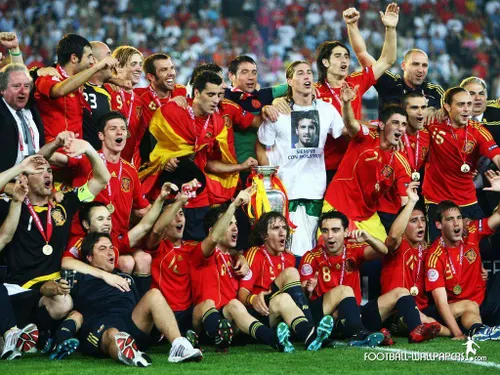

Tiki-taka made Spain the most dominant international side of its golden era, built on relentless short passing, patient circulation, and suffocating positional discipline. But football’s collective tactical intelligence caught up: opponents learned to sit deep, congest central zones, and let Spain pass sideways into exhaustion rather than penetration. Spain’s response over the following years wasn’t to abandon their identity, but to sharpen it.
The core adjustment has been tempo and directness within possession, rather than possession for its own sake. Where earlier tiki-taka sometimes prioritized retaining the ball as an end goal, the modern version treats possession as a platform for faster vertical progression once space appears. Midfielders are drilled to recognize the moment a passing lane opens between defensive lines and thread it immediately, rather than reset the move through another five passes.
Width has also become a bigger weapon. Classic tiki-taka relied heavily on narrow combination play through the center, funneling possession through technical midfielders. Spain’s modern iteration pairs that central control with genuine one-on-one wide threats — wingers instructed to isolate full-backs and beat them with pace and dribbling, stretching a defense horizontally in a way that creates the very gaps the midfield is trained to exploit.
Pressing structure off the ball completed the reinvention. Where earlier Spanish sides sometimes struggled defensively when possession was lost, the current setup builds an immediate counter-press into the system: lose the ball, win it back within seconds, exploit the disorganization before an opponent resets their defensive shape. That turns Spain’s technical control into a genuine attacking weapon rather than a purely possession-based security blanket.
The players entering Spain’s system now are drilled in these principles from academy level, meaning the tactical identity isn’t reliant on any single generation’s interpretation — it is baked into the pipeline. That is arguably the most important reinvention of all: tiki-taka is no longer a style tied to one golden cohort of midfielders, but a repeatable, teachable structure the federation can regenerate era after era.
The result is a version of Spanish football that keeps its historic identity — control, patience, technical superiority — while adding the vertical speed and defensive intensity that the original tiki-taka era sometimes lacked against the most disciplined opponents.