
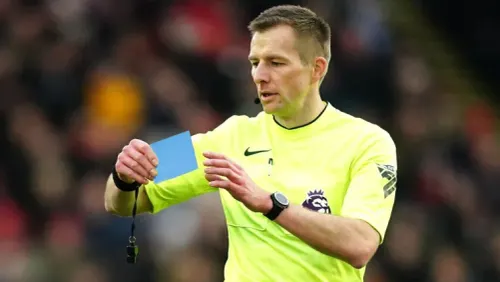

The idea of a blue card — a sin-bin style punishment that temporarily removes a player from the field, similar to systems used in rugby and hockey — has moved from a fringe suggestion to a genuine talking point in football’s rule-making circles. The core appeal is simple: football’s current disciplinary system has a gap between a yellow card, which carries little immediate in-match consequence, and a red card, which many consider too severe a punishment for certain cynical fouls.
Proponents argue a blue card would specifically target tactical fouls — deliberate professional fouls to stop a promising attack, or persistent dissent toward officials — with an immediate, visible cost: ten minutes down a player, rather than simply a mark on a card that may not change the game’s outcome at all. Rugby and field hockey have used similar sin-bin systems for years with broad acceptance, and proponents point to a reduction in cynical, game-stopping fouls in those sports as the intended effect for football.
The counterarguments are just as substantial. Critics worry a blue card adds another layer of subjective officiating judgment in a sport already strained by inconsistent refereeing standards — deciding whether a foul deserves yellow, blue, or red requires split-second interpretation of intent that even VAR review sometimes fails to resolve cleanly. There’s also concern about competitive fairness: a ten-minute man-advantage in a low-scoring sport like football could distort match outcomes far more dramatically than in a high-scoring sport like rugby, where scoring chances are more frequent and the advantage evens out over time.
Trial competitions in some lower-tier and youth competitions have tested blue-card systems, offering early data points but nothing close to conclusive evidence at the elite level. FIFA and IFAB, football’s rule-making body, have signaled interest in continuing to study the concept rather than committing to a fast rollout across major competitions.
Whether blue cards eventually arrive in the Premier League or a World Cup will likely hinge on whether trial data shows a genuine reduction in cynical fouling without introducing new inconsistency or unintended tactical exploitation — teams deliberately targeting an opponent’s key player knowing a shorter, more survivable punishment exists. Until that evidence is clearer, expect blue cards to remain a much-discussed idea rather than an imminent rule change in the sport’s biggest competitions.