
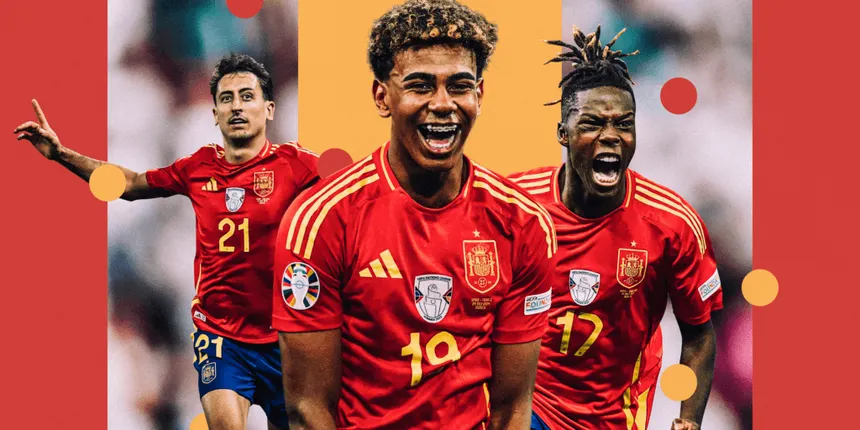

Spain’s recent tournament success, paired with an extraordinarily deep pipeline of emerging young talent, has fueled genuine belief that another World Cup title is within reach in the coming cycles. Whether that belief converts into an actual trophy depends on several intersecting factors beyond raw individual quality.
The most obvious asset is depth. Unlike previous golden generations built around a specific overlapping cohort of players reaching their prime simultaneously, Spain’s current pipeline spans multiple age groups, suggesting the squad’s overall quality won’t fall off a cliff as any single group of players ages — a structural advantage compared to nations more dependent on one generational wave.
Tactically, Spain’s willingness to evolve its historic possession identity — adding pace, width, and pressing intensity to the traditional tiki-taka framework — gives the young generation a system built to compete with the increasingly physical, transition-focused football that has challenged pure possession sides in recent tournaments.
There are real obstacles standing between talent and trophy, however. World Cup success depends heavily on tournament variance — favorable draws, injury luck to key players, and marginal refereeing decisions in knockout matches can derail even genuinely superior squads. Spain’s own recent history includes tournaments where a technically outstanding squad exited earlier than its overall quality suggested it should have, a reminder that talent alone doesn’t guarantee results in a single-elimination format.
Physical and mental readiness for knockout football is another factor separate from raw skill — young players need experience of the unique pressure of World Cup knockout matches, a different psychological environment than even the biggest club fixtures, and that experience typically comes from actually competing in and sometimes losing those matches first.
On balance, the ingredients are genuinely in place for Spain’s next generation to compete seriously for the trophy — deep talent, an adaptable tactical identity, and a footballing culture with recent experience of exactly this kind of tournament success. Whether it happens in the very next World Cup cycle or takes another tournament for this young core to fully mature into knockout-tested winners, Spain’s underlying trajectory suggests the country’s period of relevance at the very top of international football is far from over.