

Introduction
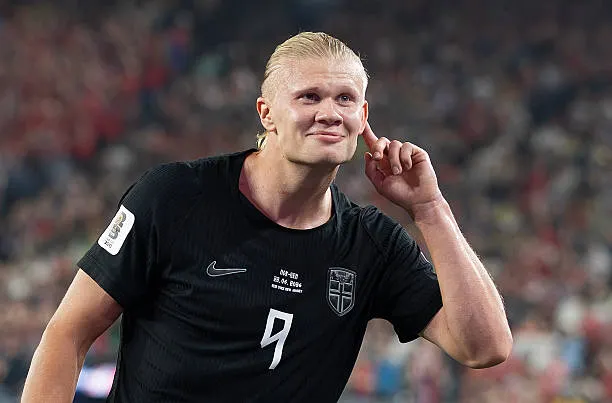
Erling Haaland’s name is now synonymous with goals — at Salzburg, at Dortmund, at Manchester City, and now on football’s biggest stage with Norway. What’s less discussed is that he was born in England, holds a British passport, and once scored more goals in a single youth international match than most professionals manage in a full season. Here are ten facts that sit behind the finishing statistics.
Table of Contents
- Born in Leeds, not Norway
- His father’s Premier League career and its lasting link
- Nine goals in a single match at Under-20 level
- Five goals in 56 minutes at senior club level
- Choosing Norway over England
- The Dortmund years alongside Jude Bellingham
- A €60 million release clause that reshaped Manchester City’s attack
- Norway’s long wait for a men’s World Cup return
- His statistical dominance in front of goal
- What a first World Cup means for his legacy
1. Erling Haaland was born in Leeds, England
Erling Braut Haaland was born on July 21, 2000, in Leeds, West Yorkshire, England. At the time of his birth, his father Alf-Inge Håland was playing for Leeds United, which is why Erling Haaland also holds a British passport. Despite the English birthplace, he chose to represent Norway internationally.
2. His father was a professional footballer in the Premier League
Alf-Inge Håland’s own playing career, including his time at Leeds United, gave young Erling an early, direct connection to top-level English football — and reportedly informed his father’s advice years later on which European club would best develop his career.
3. He scored nine goals in a single Under-20 World Cup match
At the 2019 FIFA U-20 World Cup, Erling Haaland made history by scoring nine goals in a single match against Honduras, as Norway won 12–0. Although the team did not progress from the group stage, Haaland finished as the tournament’s top scorer and won the Golden Boot.
4. He scored five goals in his first two matches for Borussia Dortmund
In his second match for Dortmund, Haaland came off the bench and scored twice in a 5–1 win, meaning he had scored five goals across his first two matches in only 56 minutes of total playing time — an immediate announcement of his arrival as one of the most dangerous young forwards in world football.
5. He chose Norway over representing England
Despite being born in England and holding a British passport, Haaland chose to represent Norway and played for every major Norwegian youth national team level. It’s a decision that means Norway, rather than England, has been the primary international beneficiary of one of the most prolific strikers of his generation.
6. His Dortmund years directly overlapped with Jude Bellingham’s development
At Dortmund, Haaland played alongside talents such as Jude Bellingham, Marco Reus and Jadon Sancho, with his combination of size, speed and finishing making him a nightmare for Bundesliga defenders. Haaland had chosen to join Dortmund from Red Bull Salzburg partly on the advice of his father, who knew the club would provide the ideal launching pad for a truly great career.
7. His move to Manchester City was triggered by a release clause
On May 10, 2022, Haaland reached an agreement with Manchester City, officially joining the club on July 1, 2022, after the payment of his 60 million euro release clause — a modest figure by modern superstar standards that reflected Dortmund’s transfer strategy of building in exit terms for its most valuable young players.
8. Norway had gone decades without reaching a men’s World Cup before 2026
Norway’s qualification for the 2026 World Cup ended a long absence from the men’s tournament, giving Haaland his first appearance on football’s biggest stage after years of prolific club form at Dortmund and Manchester City that had, until now, gone unseen at a World Cup.
9. His per-90-minute scoring rate remains statistically extreme
Haaland’s combination of physical strength, explosive movement and finishing efficiency has placed him alongside forwards like Kylian Mbappé, Harry Kane, Robert Lewandowski and Cristiano Ronaldo among the sport’s most productive strikers, with his club scoring rate at Manchester City among the highest recorded in Premier League history relative to minutes played.
10. A first World Cup carries outsized stakes for his legacy conversation
Because Haaland had never previously featured at a men’s World Cup, his 2026 performances are being treated by pundits as the missing data point in comparisons with Mbappé, Bellingham and other members of his generation who already had major tournament pedigree — making Norway’s run in North America unusually significant for how his career is ultimately assessed.
Key Statistics Table
| Category | Figure |
|---|---|
| Birthplace | Leeds, England |
| Nationality represented | Norway |
| Goals in single U-20 World Cup match | 9 (vs. Honduras, 2019) |
| Dortmund release clause paid by Man City | €60 million |
| First men’s World Cup appearance | 2026 |
Historical Context
Haaland’s dual heritage — English birth, Norwegian international career — places him among a growing number of modern footballers whose eligibility and family circumstances span multiple footballing nations, a pattern increasingly common as European leagues become more internationally interconnected at the player-recruitment level.
Expert Analysis
Coaches who worked with Haaland at Salzburg and Dortmund have pointed to his combination of physical maturity and clinical instinct as unusually complete for his age group, traits that made the step up to Manchester City and now international tournament football look comparatively seamless despite the step in opposition quality.
FAQs
Where was Erling Haaland born? Leeds, England, while his father Alf-Inge Håland was playing for Leeds United.
Why does Haaland play for Norway instead of England? Despite his English birthplace and British passport, he chose to represent Norway, the nation of his father’s football career and family heritage.
Is 2026 Haaland’s first World Cup? Yes — Norway’s qualification for the 2026 tournament marked his first appearance at a men’s World Cup.
Conclusion
Haaland’s finishing numbers speak for themselves, but the biographical detail — an English birthplace, a father’s Premier League career, a nine-goal youth international haul — adds texture to a story usually reduced to goals-per-game ratios. His first World Cup now offers the missing chapter in an otherwise remarkably complete résumé.