

Introduction
For a nation that had never previously earned a single point at a men’s World Cup, simply reaching the Round of 16 on home soil was already a historic achievement. But Saturday’s 3-0 defeat to Morocco in Houston brought that fairytale run to a firm close, and the manner of the defeat — Morocco needing only five shots, the fewest by a winning team in World Cup knockout history — raises real questions about how Canada’s tournament ultimately unravelled.
Table of Contents
- How Canada got here
- The match: a slow start becomes a rout
- Biggest tactical mistakes
- Manager decisions under scrutiny
- Player errors and missed chances
- Defensive problems exposed
- Statistical breakdown
- Mental factors and momentum
- Future consequences for Canadian football
- Lessons learned
How Canada Got Here
Canada’s route to the Round of 16 was built on defensive resilience rather than attacking flair — a draw with Bosnia and Herzegovina, a 6-0 rout of Qatar, then a narrow 1-0 win over South Africa in the Round of 32 to reach the knockout stage for the first time in the nation’s history. That journey made this Round of 16 tie against a Morocco side already established as a genuine giant-killer, having eliminated the Netherlands on penalties in the previous round, a considerable step up in class.
The Match: A Slow Start Becomes a Rout
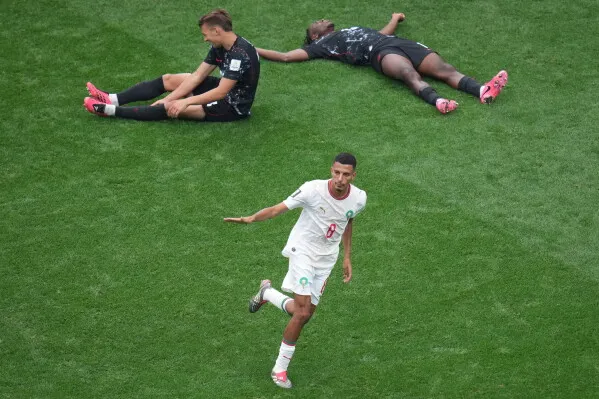
Analysis based on match reports: the first half in Houston was largely even and low-quality, with neither side able to create clear chances. Morocco’s breakthrough came through Azzedine Ounahi in the second half, converting from close range after a free-kick routine involving Achraf Hakimi, before the same midfielder doubled the lead by exploiting stretched Canadian defensive lines late on. Substitute Soufiane Rahimi, on for the injured Ismael Saibari before half-time, added a third in stoppage time after a driving run from Brahim Díaz, who recorded an African record fourth assist of the tournament in the process.
Biggest Tactical Mistakes
Analysis: Canada’s approach relied heavily on defensive compactness holding up over 90 minutes, but once Morocco’s first goal arrived, the Canadian shape stretched in search of an equaliser, opening exactly the kind of transition space Morocco’s counter-attacking trio thrives in. The second and third goals both came from Canada committing bodies forward and being caught in numbers behind the ball — a tactical trade-off that made sense chasing the game, but one Morocco punished with clinical efficiency.
Manager Decisions Under Scrutiny
Jesse Marsch’s decision to restore Alphonso Davies to a more advanced role after his return from injury added attacking threat but arguably left Canada more exposed defensively down the left, the exact side Morocco targeted for their second goal. With Ismael Kone already ruled out for the tournament with a broken ankle, Canada’s midfield options were already stretched thin heading into the tie, limiting Marsch’s ability to reshape the side reactively once Morocco took control.
Player Errors and Missed Chances
Canada’s best chances arrived early through Jonathan David and Tani Oluwaseyi, both denied by strong saves from Morocco goalkeeper Yassine Bounou — missed opportunities that, with the game still goalless, would have significantly changed the tie’s complexion. Once Morocco led, Canada’s overall shot quality dropped further, and the co-hosts never truly threatened an equaliser despite requiring one for the remainder of the match.
Defensive Problems Exposed
The clearest defensive issue was structural rather than individual: Canada’s back line and midfield became increasingly disconnected as the second half wore on, allowing Morocco’s forwards and wide players to find pockets of space between the lines. Morocco’s third goal, in particular, exploited a defence stretched by Canada’s own search for a way back into the match.
Statistical Breakdown
Remarkably, the underlying numbers suggest a far tighter contest than the scoreline indicates — Morocco recorded an expected goals (xG) figure of 0.85 compared to Canada’s 0.78, a narrow analytical gap that stands in sharp contrast to a 3-0 final score. Morocco’s win came from just five shots in total, the fewest by a winning side in World Cup knockout-stage history since such records began in 1966, underlining just how clinically they took their limited opportunities.
Mental Factors and Momentum
Playing in front of a home crowd carrying decades of pent-up World Cup hope may have added pressure once Canada fell behind, with the psychological weight of a first-ever knockout win suddenly shifting to fear of a missed opportunity. Morocco, by contrast, arrived with the calm of a side that had already survived a penalty shootout against the Netherlands and reached the semi-finals four years earlier — tournament experience Canada’s squad simply didn’t have.
Future Consequences for Canadian Football
Despite the manner of the defeat, reaching a first-ever World Cup knockout round on home soil represents a genuine landmark for Canadian football, and the exposure given to young players in this squad is likely to accelerate the sport’s growth domestically regardless of the eventual scoreline. The federation will point to record participation numbers and stadium attendances as evidence that the tournament has already delivered its primary goal for the sport in Canada, win or lose.
Lessons Learned
The clearest lesson from this defeat is that fine margins — five shots converted into three goals, a stretched defensive shape exploited twice in quick succession — can turn a tight, competitive tie into a comprehensive-looking scoreline. Canada’s underlying performance was far more competitive than 3-0 suggests, which offers a genuine foundation to build from as this group of players matures ahead of future tournament cycles.
Key Statistics Table
| Metric | Figure |
|---|---|
| Final score | Canada 0-3 Morocco |
| Expected goals (xG) | Canada 0.78, Morocco 0.85 |
| Shots by winning side | 5 (fewest by a winning team in World Cup knockout history) |
| Canada’s previous World Cup points (pre-2026) | 0 |
| Canada’s World Cup knockout appearances | 1 (2026) |
Analysis compiled from match reports, not official FIFA statistics unless otherwise cited.
Conclusion
Canada’s exit ends a genuinely historic run for a nation that had never won a World Cup match before this tournament, and the underlying numbers suggest the scoreline flattered Morocco more than it reflects a one-sided contest. The lessons here are structural rather than damning — a young, inexperienced squad stretched by an experienced, clinical opponent in the biggest moment of its footballing history.