
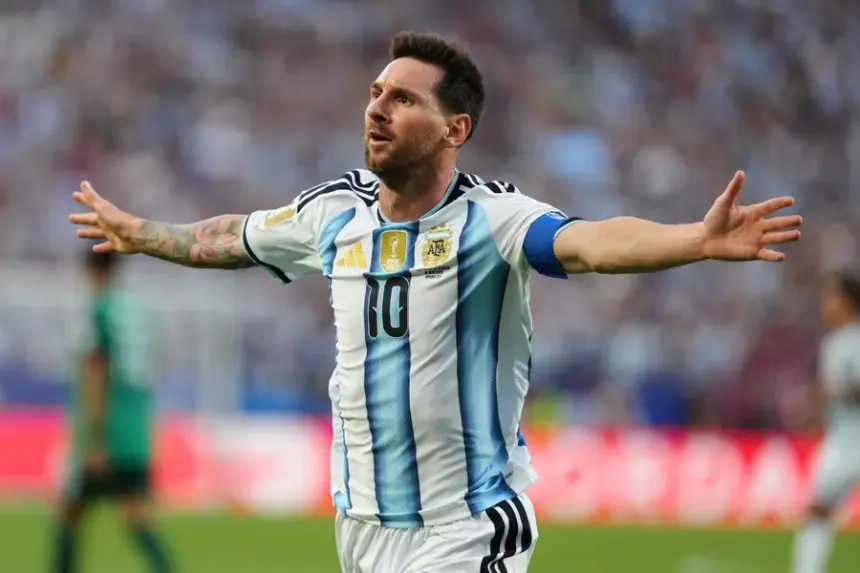

Lionel Messi arrived at his sixth World Cup at age 38, widely expected to be his last, and he has used it to rewrite the tournament’s record books rather than fade quietly into retirement.
A Record-Breaking Campaign
Messi opened with a hat-trick against Algeria and has continued scoring through the knockout rounds, reaching eight goals by the quarterfinals, tied with Kylian Mbappé atop the Golden Boot standings. Along the way, he surpassed Germany’s Miroslav Klose to become the all-time leading scorer in men’s World Cup history.
A Dramatic Path Through the Knockouts
Argentina’s route has not been straightforward. The team needed a narrow win over Cape Verde in the Round of 32 before edging Egypt 3-2 in the Round of 16, a match involving late VAR drama and a decisive Messi goal. Argentina now faces Switzerland in the quarterfinals on July 11 in Kansas City.
What Winning Would Mean
A second consecutive title would be an extraordinary achievement given Messi’s age and the physical demands of an expanded 48-team tournament requiring up to eight matches for finalists. It would also strengthen his case for a ninth Ballon d’Or, an award for which he has already re-entered contention after his group-stage form.
The Stakes Ahead
Whether or not Argentina reaches the final on July 19, Messi has already secured his place in World Cup history through his scoring record. A deep run from here would add a fitting final chapter to a career that has defined a generation of football.