
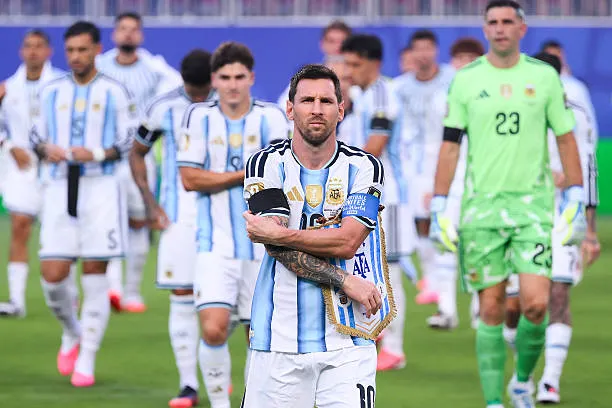

As Lionel Messi’s international career nears its end, this World Cup has offered early evidence of which Argentina players are ready to shoulder greater responsibility once their captain steps away.
Julián Álvarez
Álvarez delivered the decisive moment of Argentina’s quarterfinal win over Switzerland, scoring a spectacular extra-time strike from outside the box after the match had been level following Dan Ndoye’s second-half equalizer. His growing influence throughout the tournament suggests he is increasingly capable of being Argentina’s primary attacking threat rather than a secondary option alongside Messi.
Enzo Fernández
Fernández’s stoppage-time winner against Egypt in the Round of 16, arriving after Argentina had trailed 2-0 with just minutes remaining, showed a composure under pressure that will be essential for any Argentina side navigating major tournaments after Messi’s departure.
Cristian Romero
Romero’s goal in that same comeback against Egypt demonstrated a growing attacking contribution from a player primarily valued for his defensive work, suggesting a level of all-around quality that could prove valuable in future tournament cycles.
Alexis Mac Allister
Mac Allister’s opening goal against Switzerland, created by a Messi assist, showed the kind of movement and finishing that could allow him to become a more central attacking figure as Argentina’s squad evolves.
The Bigger Picture
Even in the quarterfinal against Switzerland, where Messi failed to score for the first time all tournament, Argentina still found a way to win, largely through these emerging contributors. Whether this squad can go all the way in 2026 remains to be seen, but the emergence of these players offers genuine reassurance that Argentina’s next generation is already prepared to carry the team forward.