
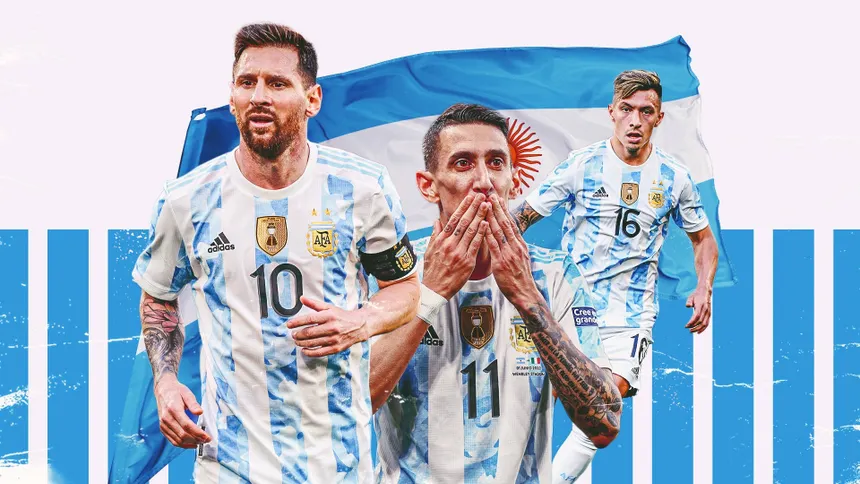

As Lionel Messi’s international career approaches what may be its final chapter, Argentina possesses a genuine pool of players capable of stepping into greater leadership and attacking responsibility for the national team.
Julián Álvarez
Álvarez’s decisive extra-time goal against Switzerland in the 2026 quarterfinals reinforced his standing as Argentina’s most natural successor as the team’s primary attacking focal point, having already contributed significantly during the 2022 World Cup triumph.
Enzo Fernández
Fernández’s stoppage-time winner against Egypt in the Round of 16, and his goal in the semifinal comeback against England, demonstrated the kind of composure under pressure that could see him take on greater leadership responsibility in midfield.
Lautaro Martínez
Martínez’s header to complete Argentina’s semifinal comeback against England showed his continued reliability as a finisher, a role he has filled consistently across Argentina’s recent major tournament successes.
Franco Mastantuono
Widely regarded as one of Argentina’s most promising young talents, Mastantuono did not make the final 2026 World Cup squad but remains a name closely tied to the national team’s attacking future.
Alejandro Garnacho
Garnacho’s development at club level has made him one of the more closely watched young Argentine attackers, representing part of the broader wave of young talent expected to take on larger roles in future tournaments.
Valentín Barco
Barco’s inclusion in the 2026 squad reflects his growing importance as a versatile attacking option from defense, part of Argentina’s deliberate effort to build depth beyond its established core.
The Bigger Picture
No single player is likely to replace Messi’s individual impact outright, but this collection of talent suggests Argentina’s transition, whenever it fully arrives, will be built on genuine depth rather than a search for one direct successor.