
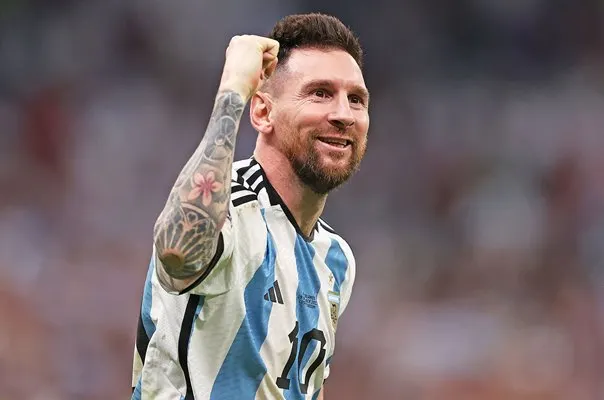

Lionel Messi’s international career redefined what was possible for a single player to mean to a nation. From the heartbreak of 2014 and 2016 to the redemption of Qatar 2022, Messi became the emotional and tactical center of gravity for Argentina’s national team. So the question facing the federation, the coaching staff, and every fan wearing the sky blue and white is unavoidable: what happens next?
The honest answer is that no successor will replace Messi in the way he existed for Argentina — a generational talent who arrived at the perfect intersection of skill, leadership, and narrative. But replacing an era does not mean replacing a single role. Argentina’s recent squads already show the outline of a post-Messi identity: a deeper pool of technical midfielders, a settled defensive spine, and a coaching staff under Lionel Scaloni that has proven it can build a collective structure rather than a star vehicle.
Scaloni’s greatest achievement in 2022 wasn’t unlocking Messi — it was building a team good enough that Messi could operate as a free-roaming conductor rather than the sole creative outlet. Players like Alexis Mac Allister, Enzo Fernández, and Rodrigo De Paul give Argentina midfield control that does not depend on one man dropping deep to dictate tempo. Julián Álvarez has shown he can lead the line and combine in tight spaces, offering a different kind of central threat than Messi ever provided.
Where Argentina will feel the absence most is in isolated, low-percentage moments — the free kick from a tight angle, the dribble through three defenders when nothing else is on, the ability to manufacture a goal from nothing in a scoreless slog. Those moments won consecutive tournaments. No single replacement fills that gap; it will likely take a collective adjustment in style, leaning more on pressing, transition speed, and squad depth rather than individual magic.
History offers a cautious precedent: Brazil won World Cups after Pelé, France remained competitive after Zidane, and Germany kept producing winning sides across golden generations. Continuity of footballing culture and youth development matters more than the presence of one transcendent player. Argentina’s academy pipeline, its winning habits instilled under Scaloni, and its increasingly balanced squad suggest the answer to the title question is yes — but the version of Argentina that wins again will look and feel different from the one that finally delivered for Messi in Qatar.