

Argentine football’s tactical identity has never been a single, fixed idea — it has shifted with generations of players, coaches, and the pressures of major tournaments. Tracing that evolution explains as much about the country’s football culture as any single trophy.
In earlier eras, Argentina’s reputation rested on technical individualism: a football culture that prized the dribbler, the playmaker who could win a match alone, epitomized by legends whose genius outweighed structured team shape. Tactically, sides built around these individuals often prioritized giving their best player freedom over rigid defensive organization, trusting that raw talent would outweigh tactical discipline against most opposition.
That began shifting as the international game became more physically and tactically demanding. Successive generations had to reconcile Argentina’s attacking traditions with the need for a more organized, compact defensive structure capable of competing with European sides built on pressing and physicality. The results were sometimes uneven — talented squads that struggled with tactical cohesion, unable to translate individual quality into collective control of matches.
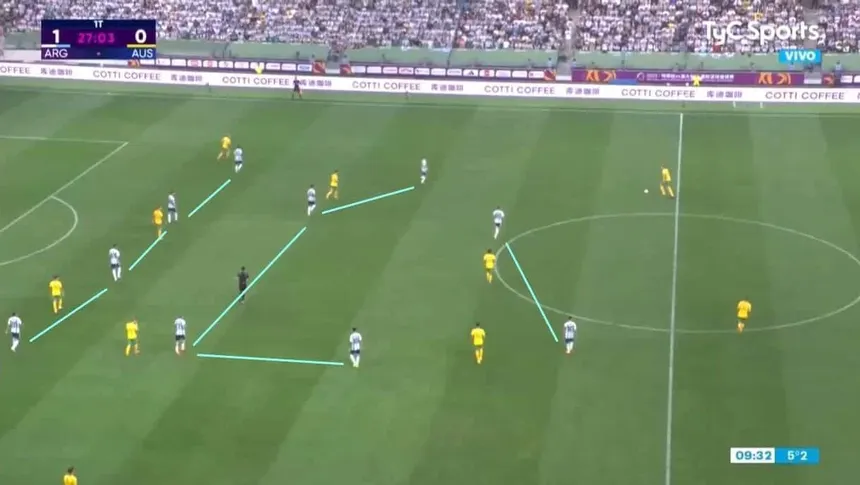
The most significant recent shift came under Lionel Scaloni, whose appointment initially raised skepticism given his lack of prior head-coaching experience. Scaloni built a team defined less by star power alone and more by defensive solidity and pressing structure, wrapped around Messi’s remaining brilliance rather than depending on it exclusively. Argentina under Scaloni became notably difficult to break down, conceding few clear chances even against elite opposition, while still generating enough moments through individual quality to win low-scoring, high-stakes matches.
This tactical maturity showed clearly across their major tournament run culminating in the 2022 World Cup: a settled back four, disciplined double pivot, and wide players instructed to track back as much as attack. It marked a genuine departure from earlier Argentine sides that occasionally sacrificed defensive solidity for attacking freedom.
Looking ahead, Argentina’s tactical identity is likely to keep evolving toward balance — retaining the flair and individual brilliance the country is famous for, while insisting on the defensive discipline and structural intelligence that turned a talented but occasionally erratic footballing nation into consistent tournament winners. The next tactical chapter will be written by a new generation of midfielders and forwards asked to carry forward both traditions at once.